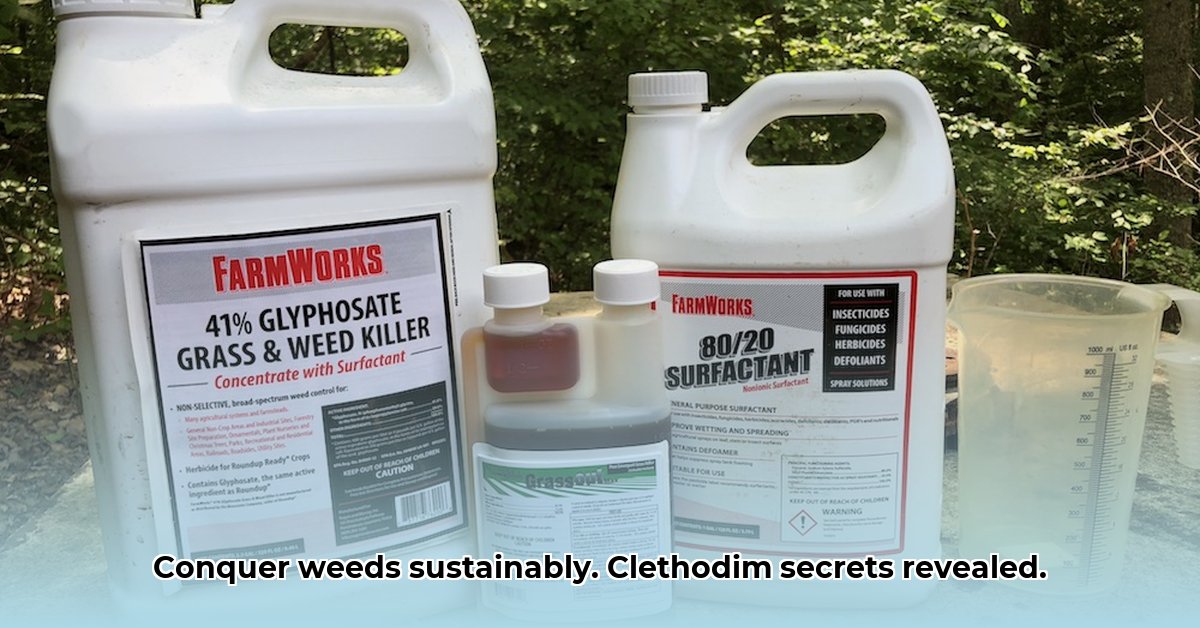
Finding effective and sustainable weed control methods is crucial for modern farming. Clethodim, readily available at Tractor Supply, offers a solution for grassy weeds, but understanding its limitations and exploring alternatives is key to long-term farm health and environmental responsibility. For additional tools, check out these helpful tillers and cultivators. This guide provides a comprehensive overview of Clethodim, its application, environmental impact, and sustainable alternatives for effective weed management.
Understanding Clethodim: A Selective Herbicide
Clethodim is a selective herbicide (a chemical that kills specific plants) effective against various grassy weeds. Its systemic action means it's absorbed by the plant, impacting both above-ground growth and roots. However, its effectiveness depends on several factors including weed species, soil type, weather conditions, and application timing. Improper application, such as spraying right before a rainfall, can significantly reduce its efficacy. Moreover, overuse can lead to herbicide resistance, rendering Clethodim ineffective over time. Some weeds, like Italian ryegrass, have already developed resistance in certain regions.
How effective is Clethodim really? While it offers good control in many situations, the success rate varies significantly depending on uncontrollable factors.
Sustainable Alternatives: Eco-Friendly Weed Control
Sustainable weed management goes beyond chemical herbicides. It focuses on building healthy soil, promoting biodiversity, and minimizing environmental impact. Several effective and environmentally friendly alternatives exist:
Cover Cropping: A Natural Weed Suppressor
Cover crops, such as legumes or rye, act as a natural weed barrier. They suppress weed growth by competing for resources like sunlight, water, and nutrients. Simultaneously, cover crops improve soil health, enriching it with organic matter and enhancing its structure. This leads to healthier crops and reduced reliance on chemical inputs in the future.
Crop Rotation: Disrupting Weed Life Cycles
Rotating crops disrupts the life cycle of weeds, reducing their populations over time. Different crops have different weed-suppressing capabilities and nutrient requirements, making rotation a powerful tool in sustainable weed management. This practice also improves soil health by preventing nutrient depletion associated with monoculture farming.
Mechanical Weed Control: The Hands-On Approach
Mechanical weed control involves physically removing weeds through methods like tillage, mowing, or hand-weeding. While labor-intensive, this approach avoids the use of chemicals, minimizing environmental risks. This method is especially suitable for smaller farms or specific areas where targeted weed removal is needed.
Biological Control: Harnessing Nature's Power
Biological control utilizes natural predators, such as insects or microorganisms, to control weed populations. This method requires careful planning and monitoring, but it offers a highly sustainable and environmentally friendly approach to weed management. Research in this area is constantly evolving, revealing new possibilities for effective biological control of diverse weed species.
Comparing Your Options: A Risk-Benefit Analysis
Choosing the best weed control method hinges on your specific conditions. The following table compares Clethodim with sustainable alternatives:
| Technology/Practice | Environmental Impact | Economic Impact | Long-Term Soil Health |
|---|---|---|---|
| Clethodim | Moderate (potential drift, resistance) | Relatively Low | Can negatively impact soil microbes over time |
| Cover Cropping | Low | Moderate | Generally improves soil health |
| Mechanical Weed Control | Low | Moderate to High | Can improve or damage soil health depending on method |
| Biological Control | Low | Moderate to High | Generally improves soil health |
Isn't there a way to combine these methods for better results? Indeed! Integrated Pest Management (IPM) combines multiple approaches for optimal effectiveness and minimal environmental impact.
Transitioning from Clethodim to Sustainable Weed Management: A Step-by-Step Guide
Completely abandoning Clethodim requires a strategic transition. Here’s a practical, step-by-step guide:
- Assess Your Weed Pressure: Identify the dominant weed species and their life cycles to inform your weed control strategy.
- Diversify Your Approach: Integrate mechanical, cultural, biological, and alternative herbicide controls.
- Implement IPM: Focus on monitoring, prevention, and targeted interventions. Regular weed scouting is crucial for early detection and timely action.
- Optimize Herbicide Application (if any): If using any herbicide (including Clethodim alternatives), adhere strictly to label instructions.
- Monitor and Adapt: Continuously monitor weed populations and adjust the strategy as needed.
Key Takeaways for Sustainable Weed Control
Clethodim can be part of a weed management plan, but its overuse leads to resistance. Sustainable practices, including cover cropping, crop rotation, mechanical control, and biological control, are crucial for long-term farm health and environmental stewardship. Remember, an Integrated Pest Management approach that combines several strategies offers the most effective and sustainable solution for weed control. Consult with local agricultural experts for personalized advice tailored to your specific farm needs and environmental context.